



Foreword
"Last week, I was talking to a CTO of a mid-sized retail company," shares Gregory Tsirkun, SENLA's VP of Sales. "He was frustrated: 'We thought with all these Big Tech layoffs, we'd finally be able to hire senior developers easily. Instead, we're drowning in resumes but can't find the right people.'"
This conversation captures a chaotic reality of today's tech talent market. Despite headline-grabbing layoffs at companies like Google, Amazon, and Microsoft – with over 130,000 tech professionals let go in 2024 alone – many businesses are still struggling to find qualified developers.
And while tech companies continue laying off workers, there are approximately 1.7 million unfilled tech positions worldwide in 2024. How did we end up here?
The Gold Rush That Wasn't
Remember the pandemic-era tech boom? Companies weren't just hiring – they were hoarding talent. "It was like watching a gold rush," notes Igor Danilov, SENLA's CEO. "Big Tech was hiring anyone who could spell 'JavaScript', often without thorough technical assessment. Now we're seeing the consequences of that approach."
"Essentially, companies weren't just hiring developers – they were hiring anyone who might potentially become a developer."
This aggressive hiring often meant:
- Minimal technical evaluation
- Preference for "versatile" candidates over specialized expertise
- Quick onboarding to fill seats rather than build capability
"Many of these hires were placed in cross-functional roles without proper assessment of their technical capabilities," Danilov explains. "When the market corrected, these were often the first positions eliminated – but by then, the damage to project quality was already done."
Where do we stand now? A market flooded with tech professionals, but not necessarily tech experts. The numbers tell a sobering story: 69% of software development projects are failing to meet their objectives. Behind these failures often lies a mismatch between claimed expertise and actual capabilities.
"We're living through what we decided to call the Talent Chaos Era,'" explains Tsirkun. "Every company needs tech talent to stay competitive, but the pool of truly qualified professionals is surprisingly small. It's creating a perfect storm where even companies with healthy budgets struggle to build effective teams."
Today's Double Bind
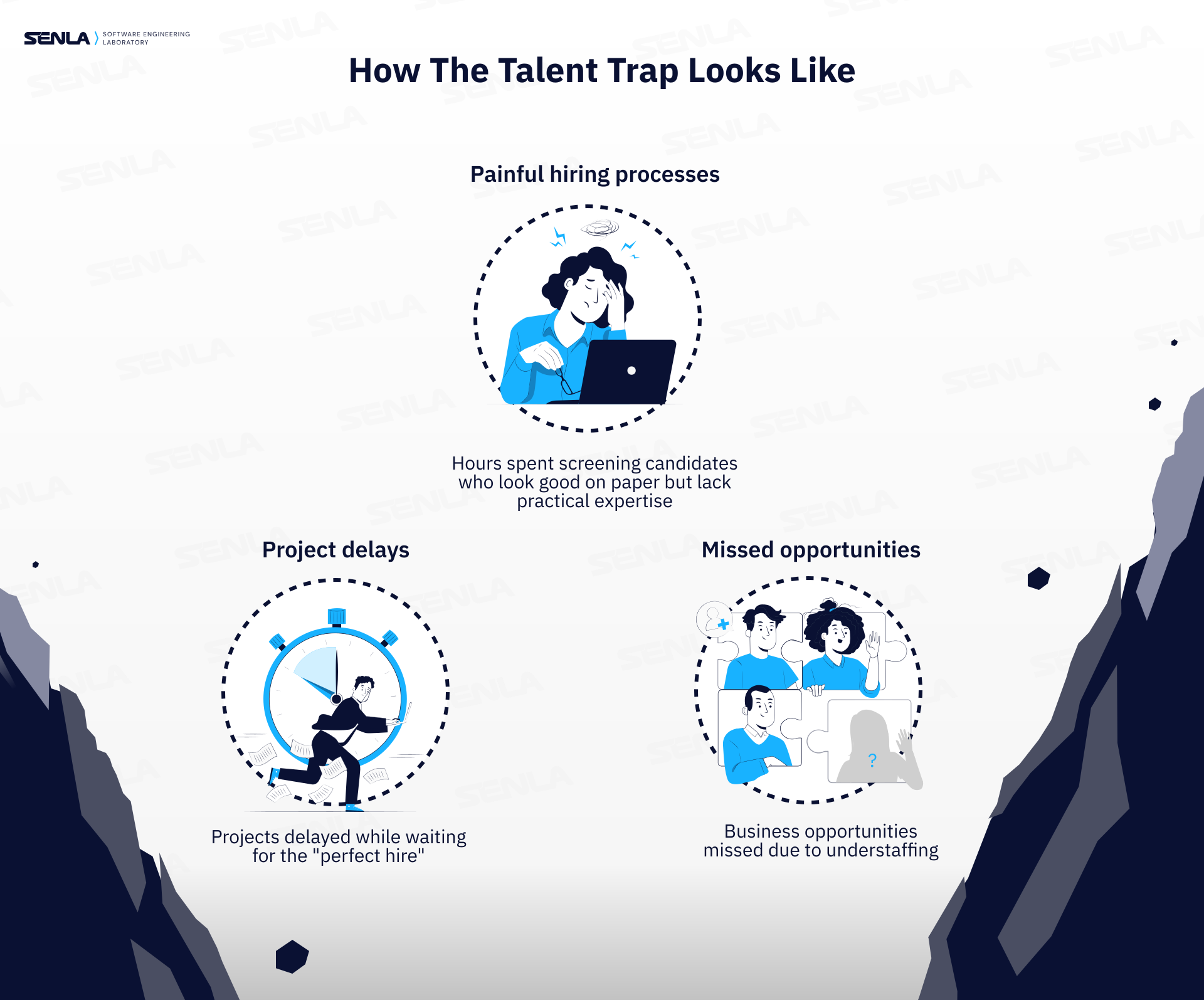
Now companies face a challenging reality: they need to innovate to stay competitive, but they're caught in what we call the Talent Trap. As detailed in our Guide for C-Level Executives, organizations have cut $144 billion from IT spending in 2024 through optimization – but many are starved for technical talent more than ever.
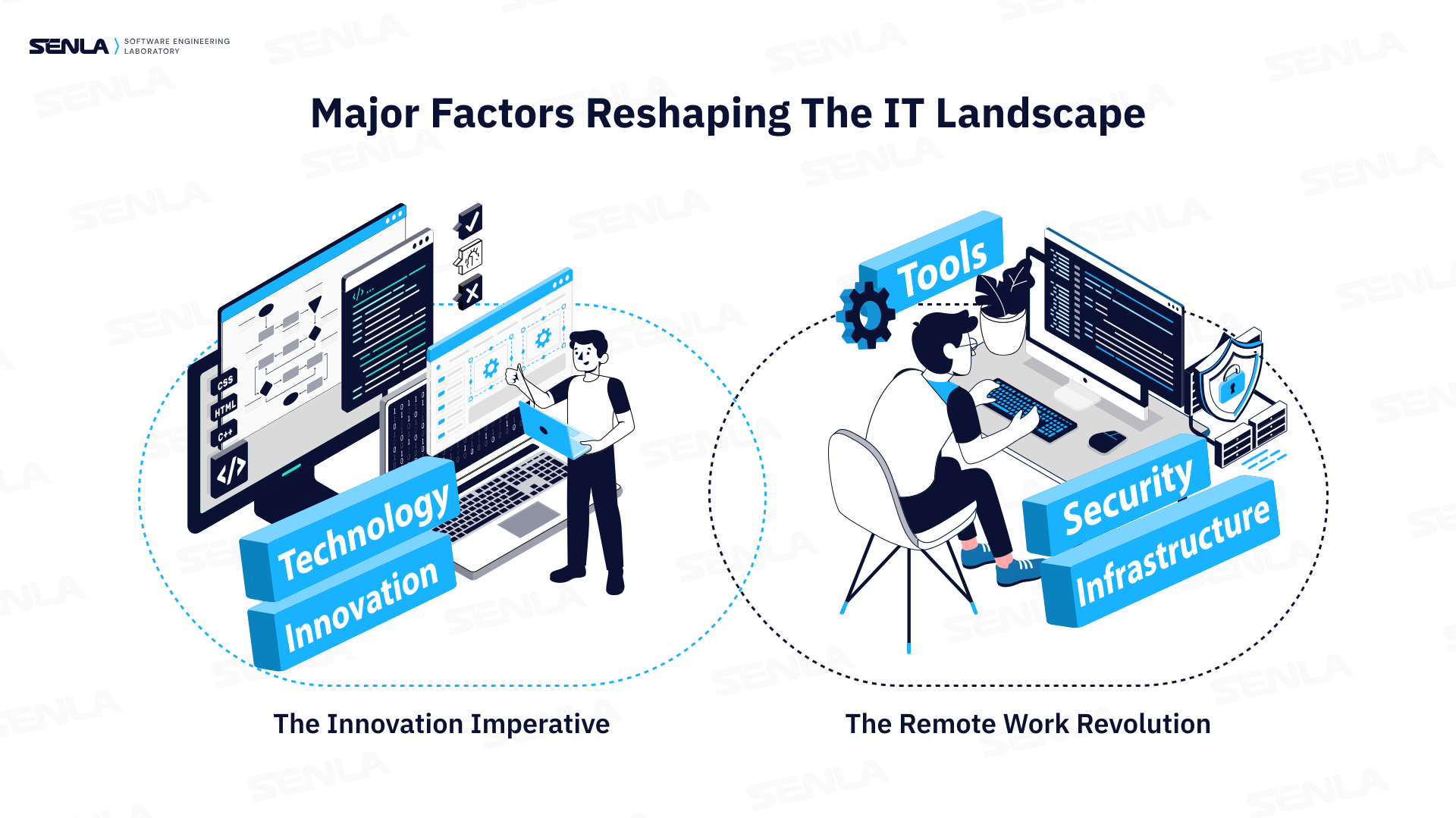
Why? Two major factors are reshaping the landscape:
1. The Innovation Imperative "Every company is now a tech company, whether they like it or not," says Danilov, SENLA's Director of Client Success. "You can't compete without digital capabilities, but you also can't outspend Big Tech for talent."
2. The Remote Work Revolution The shift to hybrid work hasn't just changed where people work – it's dramatically increased the need for technical expertise. Companies need sophisticated tools, infrastructure, and security measures just to maintain daily operations.
A Shift in Thinking
"We're seeing a fundamental shift in how technical talent needs to be accessed and deployed," explains Danilov. "The old model of posting jobs and hoping to attract top talent is dead. We're in an era where companies need to think differently about how they secure technical expertise."
The most successful companies are approaching this challenge differently. Instead of trying to capitalize on the layoff wave, they're rethinking their entire approach to technical talent.
Take BOSCH, for example. By partnering with external teams, they achieved a 20% ROI in just six months of implementation. "The key was stopping the endless search for individual 'unicorns' and instead focusing on accessing pre-vetted, cohesive teams," explains Danilov.
What Smart Companies Are Doing Differently
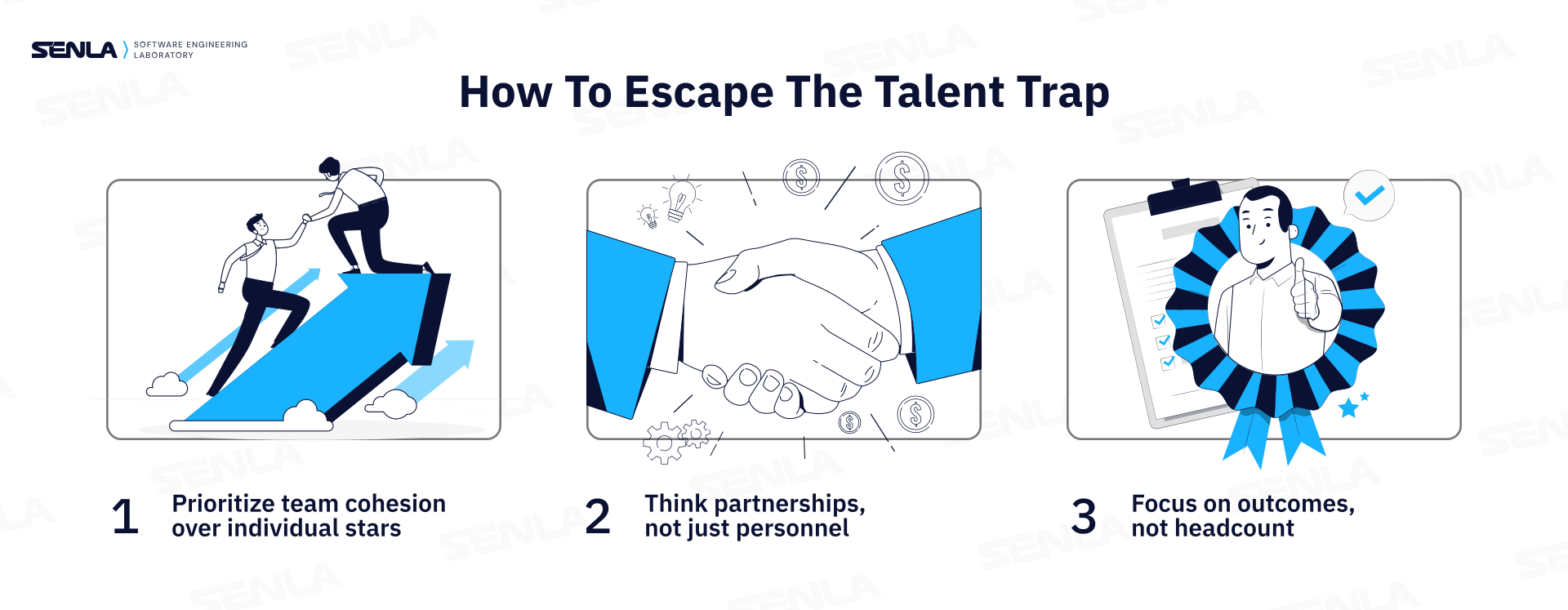
1. They're prioritizing team cohesion over individual stars
"A great developer in the wrong team is still the wrong solution," Danilov notes. "We're seeing better results when companies bring in complete, well-functioning teams rather than trying to build from scratch."
2. They're thinking partnerships, not just personnel
Instead of viewing tech talent as a hiring challenge, leading companies are treating it as a strategic partnership opportunity. This shift in mindset opens up new possibilities for accessing expertise without the overhead of traditional hiring.
3. They're focusing on outcomes, not headcount
"The companies thriving right now aren't asking 'How many developers can we hire?' They're asking 'How quickly can we deliver value?'" says Danilov.
The Path Forward
If there's one lesson from the current tech talent paradox, it's this: the old playbook doesn't work anymore. The future belongs to companies that can adapt their talent strategies to focus on proven expertise and delivery capabilities rather than impressive resumes.
"In today's market, success isn't about who you can hire – it's about how effectively you can access and deploy the right technical expertise," Tsirkun concludes. "That might mean rethinking everything you thought you knew about building technical teams."
Does your company need to rethink its approach to tech talent? Start by evaluating your technology-driven score and understanding where you stand in the Talent Chaos Era.